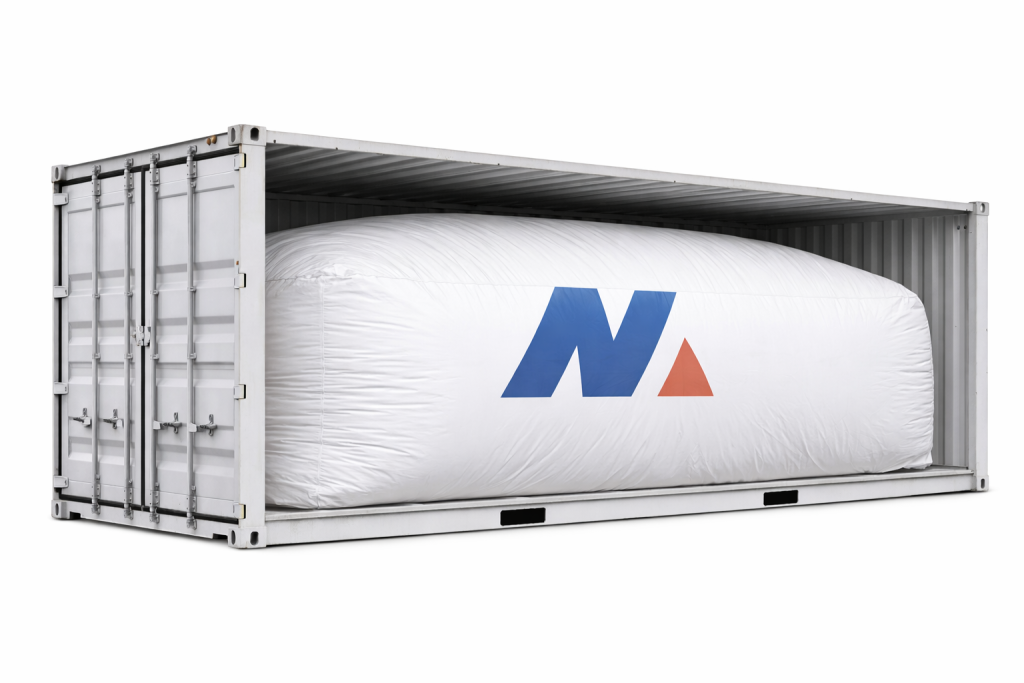
Handling flexibags is not just about filling and shipping, it’s a specialized logistics discipline. Correct procedures and trusted partners ensure safety, minimal product loss, and regulatory compliance.
Fitting and Loading Flexibags
Before filling, the flexibag must be properly secured inside the container using bulkheads, steel bars, or frame systems. This ensures the tank remains stable during transport and prevents shifting or deformation.
Emptying and Flexibags Removal
Once at destination, controlled pumping systems are used to discharge liquids from flexibags. Companies that specialize in flexibags emptying and disposal ensure that containers are cleaned and prepared for reuse or shipment, and that flexibags materials are recycled in environmentally compliant ways.
Temperature and Product Management
Certain bulk liquids, especially (used cooking) oils, become viscous or solidify at low temperatures. For these shipments, heater pads may be installed prior to loading. Upon arrival at the destination, heater pads are connected to hot water or steam systems to gently reheat the cargo, restoring the solidified product to a pumpable liquid state.
Common Pitfalls and Solutions
Incorrect installation, improper valve use, or poor securing inside the container can lead to damage or leakage, causing losses and safety risks. Experienced logistics providers mitigate these risks through training, standardized procedures, and quality equipment.
Get in touch with us today to learn more about our liquid filling and blending services, professional flexibag installation and removal, and secure short- and long-term liquid storage solutions.