You may have heard of warehouse consolidation, but not fully understood what it entails. Consolidation warehouses are specialized facilities that receive smaller shipments from multiple suppliers and combine them into one larger shipment headed to a single destination. This streamlined process helps reduce shipping costs, minimize handling, and improve overall logistics efficiency.
At MN Logistics, warehouse consolidation is one of our key areas of expertise. In this blog, we will explain how the process works and the benefits it offers for businesses shipping smaller orders to various destinations.
Types of consolidation
If you think that there is only one type of consolidation, then you are wrong. There are three types of warehouse consolidation that businesses can use: cross-docking, merge-in-transit, and merge-and-hold.
Cross-docking
Cross docking is a strategy that focuses on moving goods from the receiving dock to the shipping dock. It means that goods from incoming trucks are quickly unloaded and then loaded straight into outgoing trucks, without sitting in storage. This saves time, cuts down on storage space, and helps reduce overall costs.
Merge-in-transit
Merge-in-transit is a smart logistics strategy where products from different suppliers are combined while they are on the way to the customer. Instead of storing the goods in a warehouse first, they are merged during transit and delivered together as one complete shipment. This reduces storage and handling needs, speeds up delivery, and leads to a better customer experience. In addition, this will help to boost satisfaction and loyalty.
Merge-and-hold
Merge-in-hold is another logistics strategy where shipments from different sources are grouped together and held until everything is ready to be delivered as one complete order. This approach helps lower transportation costs, streamlines order fulfillment, and leads to better service for the customer.
Benefits and disadvantages of warehouse consolidation
If you make use of warehouse consolidation, it will bring benefits with it but also disadvantages.
| Benefits | Disadvantages |
| Lower Shipping Costs: The costs of the outbound container are shared across multiple shippers, reducing individual shipping expenses. | Delays for Other Shippers: If one shipment is delayed due to customs inspections or other issues, it can affect the delivery time for other shipments in the same consolidation. |
| Product Inspection and Reporting: Entry statements include photos of the products as they are received, ensuring a thorough check and control process, along with fact-based reporting on any damages. This allows us to fix packaging before the consignee receives the products. | Longer Lead Times: Receiving multiple inbound shipments before consolidation results in longer lead times for the final outgoing shipment. |
| Environmental Benefits: Consolidating shipments into one outbound container reduces emissions, making it more environmentally friendly. | Not Ideal for Urgent Deliveries: Warehouse consolidation may not be suitable for businesses with time sensitive or urgent shipping needs. |
| Higher Transport Costs (in Some Cases): If the central warehouse is far from your customers, transportation costs to and from the warehouse could increase. |
How MN Logistics handles consolidation
At MN Logistics International, we take careful and structured approach to warehouse consolidation. We will take you through our journey of how we handle incoming goods and prepare them for shipment.
- When a shipment arrives at our warehouse, we start by unloading the cargo, paying attention to the condition of the goods and their packaging. If we notice any signs of damage, our team will stop unloading and contacts the responsible logistics specialist for further instructions. We also document any issues clearly in the shipping papers. All information is summarized in our entry statements.
- After unloading, the transport document will be completed (CMR and proof of delivery). Everything will be recorded. Each cargo piece is measured, weighted, and labeled, with the customers number. This ensures traceability.
- After everything is weighted and labeled, entry report/statement (see below how an entry statement looks like) will be prepared. This includes order number, acceptance date, vehicle information, cargo weight, and volume. In addition, we will attach scans of shipping and customs documents, and detailed photos of the delivery, including the vehicle, the cargo before unloading, and individual cargo items. If there are any damage, photos will be made and reported.
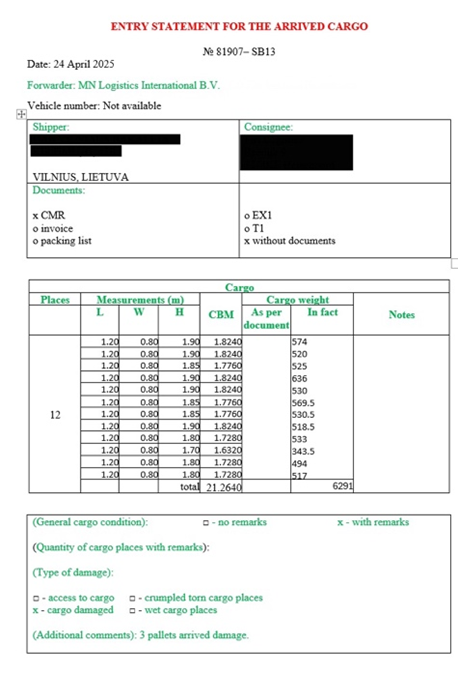
See the images below for explanation of our process:
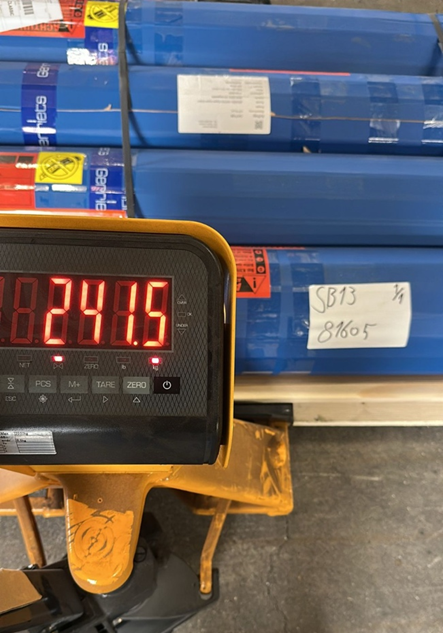
Picture 1: The inbound cargo is weighed, and dimensions are measured upon inbound.
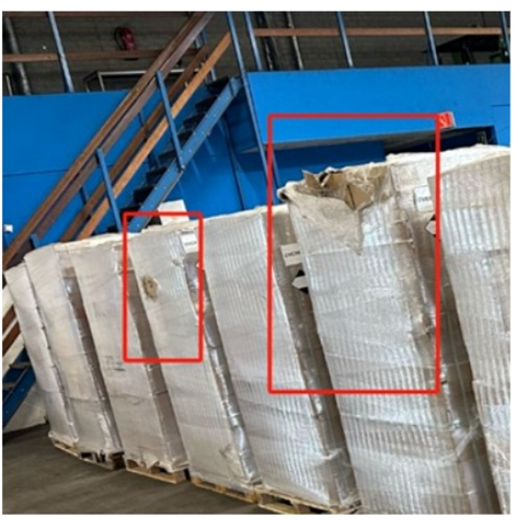
Picture 2: Damages are reported in the entry statement. The client informs us about the desired next steps (e.g. new foil or carton packaging material).
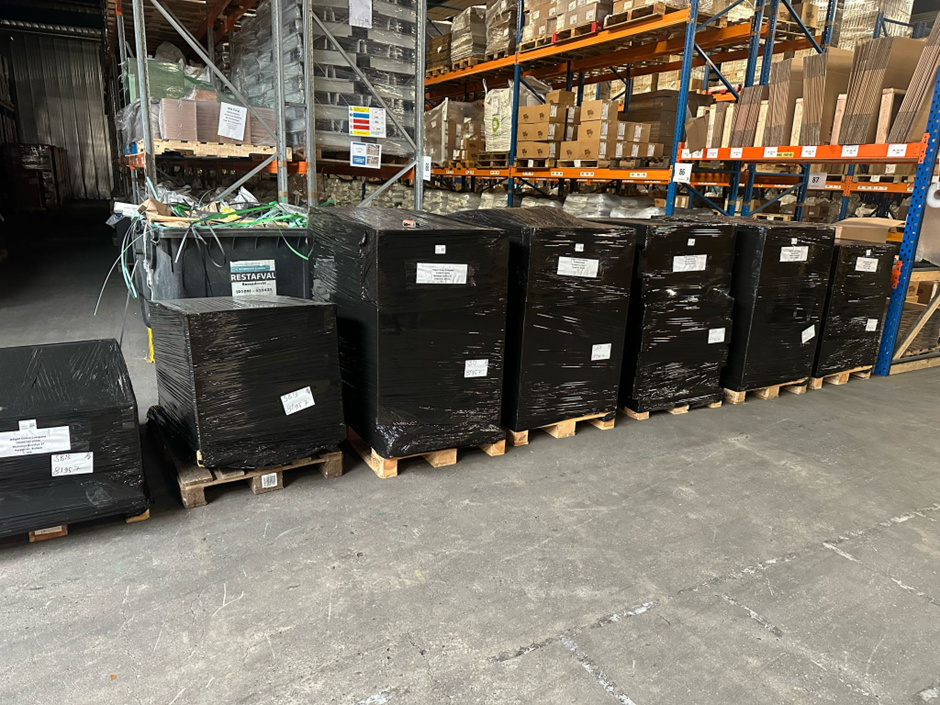
Picture 3: Overview photo of one inbound shipment received.
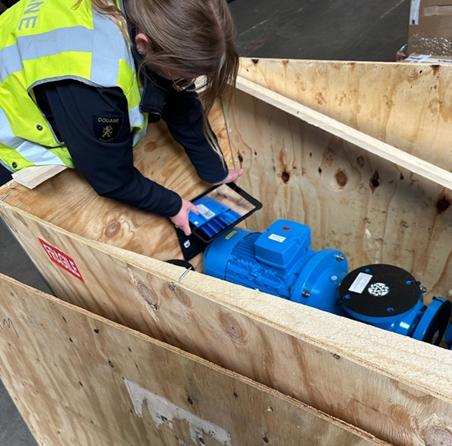
Picture 4: We facilitate customs inspections when needed.
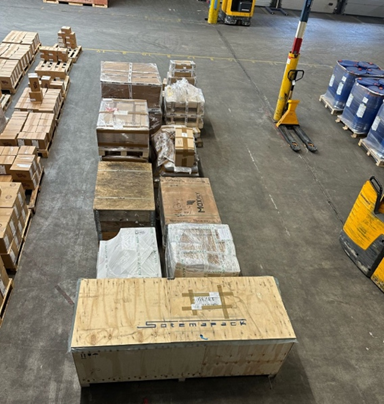
Picture 5: Prepared cargo for outbound.
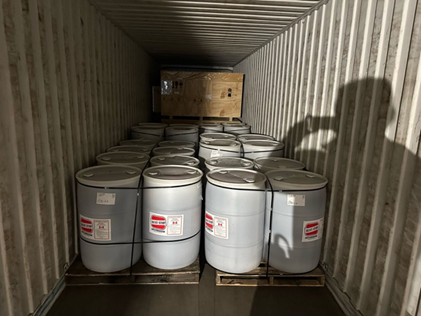
Picture 6: The loading process of the outbound container is being reported through a series of photos.
Still Have Questions? We are Here for You!
If you are looking for warehouse consolidation services and still feel you do not fully understand the process after reading this blog, do not hesitate to reach out to us.
We are happy to explain everything in more detail and find the best solution for you. Our team is ready to guide you through every step.